Previous: The Eleventh Hour |
Next: Kiss the Goat |
|
![]() |
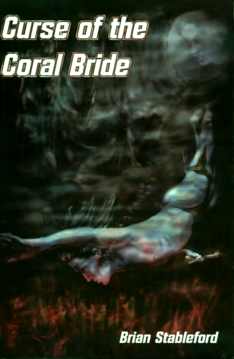
The plot of the 'The Curse of the Coral Bride' is loosely
based on a story called "The Light of Achernar" that I did for
John Pelan's anthology of tales set in Clark Ashton Smith's Zothique, 'The
Last Continent'.
I'd always wanted to design a "dying Earth" of my own, whose inhabitants would know that the end of the world was imminent. Unlike the early fantasy writers (Including CAS) who were content to accept Lord Kelvin's theory that the sun's heat was a by-product of its collapse under the force of its own gravity - which gave it a lifespan of a few million years - I wanted to use more recent estimates of a solar life span in the billions of years. In my far future the Earth's orbit has been altered so that it can circle a much larger primary (a Dyson sphere enclosing a red giant), and the mortal humans populating it are the products of a re-creation by more advanced human-descended species that have long since abandoned the Earth to its fate....thus creating a mystery as to the reason for their continued presence on the doomed planet. 'The Curse of the Coral Bride' is intended as the first of a series whose climactic volume will provide a solution to that mystery as well as an account of the destruction of the Earth. Cover Design by Ade Daniel Published by Immanion Press in November 2004 |
|||||||
![]() |
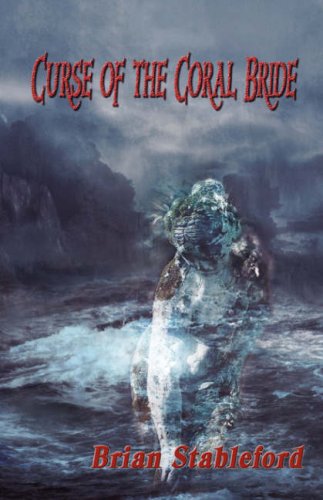
The Curse of the Coral Bride is a far-futuristic fantasy in the tradition of Clark Ashton Smith's tales of Zothique and Jack Vance's accounts of the Dying Earth. Billions of years in the future, the Earth has been repositioned around the red giant that the sun has become; earlier races having emigrated to the stars, its last inhabitants are physically similar to the humans who first achieved self-consciousness and primitive civilization, but the heavens and other aspects of their experience have been rearranged in order to make certain kinds of divination possible-to the extent that any divination is logically possible. Alas, that divination has revealed that the world is now no more than a generation away from its ultimate end, and the instrumentality of its demise is already manifest in such devastations as the Silver Death. Fleeing the Silver Death, the diviner Giriaizal ends up in a tiny island kingdom in which a young fisherman has been abruptly propelled to the throne for political reasons. Girzaizal becomes the young king's vizier and wise adviser-but the king has already been entranced by the sinister coral from which he forges an artificial bride after his human bride-to-be is slain by magic, and from that moment on, the patient hand of fate manoeuvres both of them, and all their companions, towards a suitably ironic doom.which is, after all, what the hand of fate is bound to do, in a world designed to die in an aesthetically appropriate manner. Published by Immanion Press in January 2008 |
||||||||
![]() |
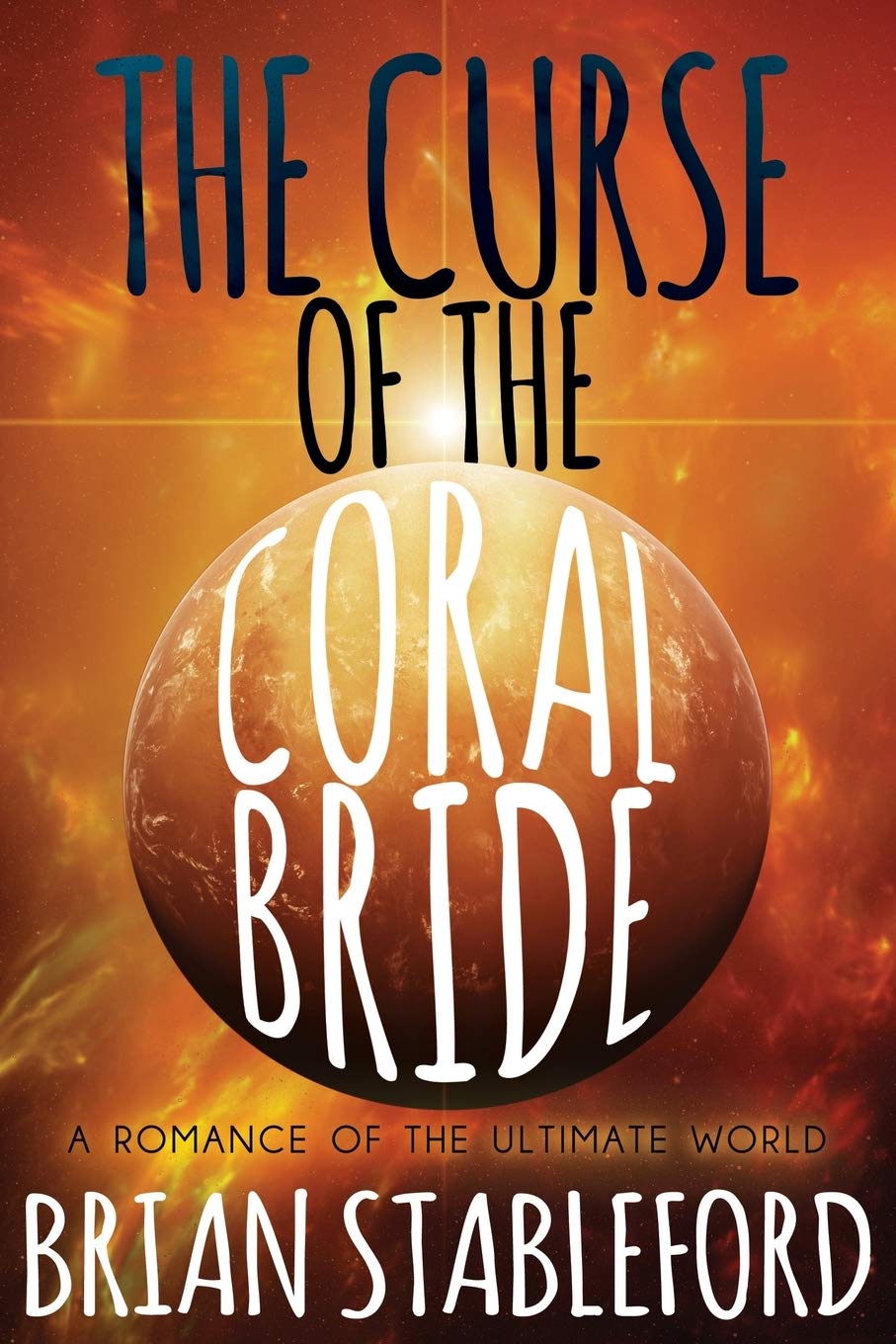
In the far future, Earth is slowing dying, as the Sun has
turned into a red giant that threatens to explode. The last inhabitants
of the planet have no idea why they're still living, and why they seem to
have been made in the image of earliest man--and not the countless human
species that have existed since. But they still have to time to ponder,
and time to kill--and they do so in the traditional way, by killing each
other! This isn't an hospitable Earth, even for magicians--especially a
well-meaning one--but Giraiazal of Natalarch is determined to do the best
he can to keep on cheating Damozel Fate, in spite of her nasty tricks, until
the very end...or at least as close to the very end as he can get. A sweeping
fantasy novel of the end of the world, in the style of Jack Vance's classic
The Dying Earth.
Published by Wildside Press in August 2013 |
Review by Ian BraidwoodCast of Characters: It took me a long time to finish this book. Not because of any problem with it, but simply because I didn't want to take a hardcover book to work and I tend to continue reading during the evening what I read at lunch. It might help explain that the author who most pushed Brian aside was Bertrand Russell. Just like Inherit the Earth, this is intended as the first volume of a six book series and was initially offered to Tor, before Immanion decided to release it. I personally find it unlikely that any others of the series will see the light of day and so will review this as a stand alone novel. Anyone who has read one of Brian's other novels based upon short stories will know that he never merely pads out the original series of events, so while The Light of Achernar will guide you as to the flavour of this book, the events and denoument are very different. Also, the Earth described herein is subtly very different, set 5 billion years or so in the future. It feels like a fantasy, but there are enough hints to allow a science fictional interpretaion. The main setting of the novel is Scleracina, an island among many, which I imagined to be like the Greek ones, but with Carribean style pirates. It is initially part of the Yuran empire, but gains its independence when misfortune overtakes Yura and a young diver finds himself elevated to the throne. Most of the story is told from the point of view of Giraiazal, magician and vizier to the royal household. It is he who tries to help when Damozel Fate deals several from the bottom of the deck; afflicting madness and misfortune liberally upon all. Giraiazal's skills are effective enough to stave off disaster, while various machinations are enacted beneath the surface. One aspect of Curse which niggled me at first was that each chapter starts with excerpts from 'The Revelations of Suomynona', which provide background, comment on the story and act as an arena to explore various philosophical issues inherent to the plot. However, after a while these became every bit as interesting as the action. They did make me realise however, something about Brian's writing, which has been staring me in the face for ages: I cannot recall a single instance where Brian has started a novel halfway through - a technique common in modern writing and film, as a way of spicing up the action. I think that maybe, Curse could have benefitted from this technique before the action begins to ensnare the reader as much as the characters. Overall, Curse of the Coral Bride is good enough to leave the reader wanting to know more about the world, but is not by any means one of Brian's best; carrying as it does the burden of introducing a series.
|
![]() |
The Brian Stableford Website |
![]() |