-
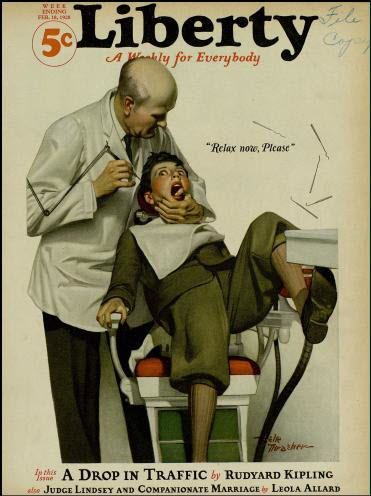
Liberty [v5 #7, February 18, 1928] ed. Sheppard Butler (Liberty Weekly, Inc., 5¢, 80pp, 10″ x 13″, cover by Leslie Thrasher) []
- 5 · “Because He Kissed His Baby” · The Editor · ed
- 7 · The Manassa Mauler—Daddy of ’Em All [Part 1 of 6] · Charles J. McGuirk · ar
- 11 · A Drop in Traffic · Rudyard Kipling · ar
- 17 · The Talking Dog · Cosmo Hamilton · ss
- 25 · Reforming Chicago · Frederick James Smith · mr
- 27 · Presidential Possibilities—Lowden · James O’Donnell Bennett · ar
- 33 · Mr. Peachpit Begins His Autobiography · Clifford Raymond · ss
- 39 · The Balloon Buster of Arizona [Part 6 of 11] · Norman S. Hall · ar
- 46 · [poem] · [unknown author] · pm
- 47 · Trub’s Diary [Trub’s Diary] · John Taintor Foote · ss
- 51 · Lindsey and Companionate Marriage · Leola Allard · ar
- 59 · Love Letters of an Interior Decorator · Bert Green · ss
- 63 · I Spoke Out of My Turn · Toni, Jr.; as told to Antoinette Donnelly · ms
- 67 · Insulting Janie · Bernice Brown · ss
Details supplied by Inam Ulhaq from Table of Contents. Omits features.